Valuing Women’s Work and Creating Fairer Futures
Every year on 18 September, International Equal Pay Day draws attention to the continuing inequalities women experience in the workplace and the importance of ensuring that work of equal value is recognised and rewarded fairly.
For many women, pay is about much more than the figure that appears on a payslip at the end of the month. It influences financial security, the ability to save, opportunities for the future and the freedom to make decisions about everyday life. When women are consistently disadvantaged economically, the effects can continue throughout their working lives and into retirement.
For women experiencing domestic abuse, financial independence can carry an additional significance. Having access to an income, savings and employment opportunities can influence the choices available when a woman is considering how to create a safer and more independent future.
International Equal Pay Day gives us an opportunity to look beyond the statistics and consider what economic equality can mean in the lives of women from different backgrounds and circumstances.
Understanding the Gender Pay Gap
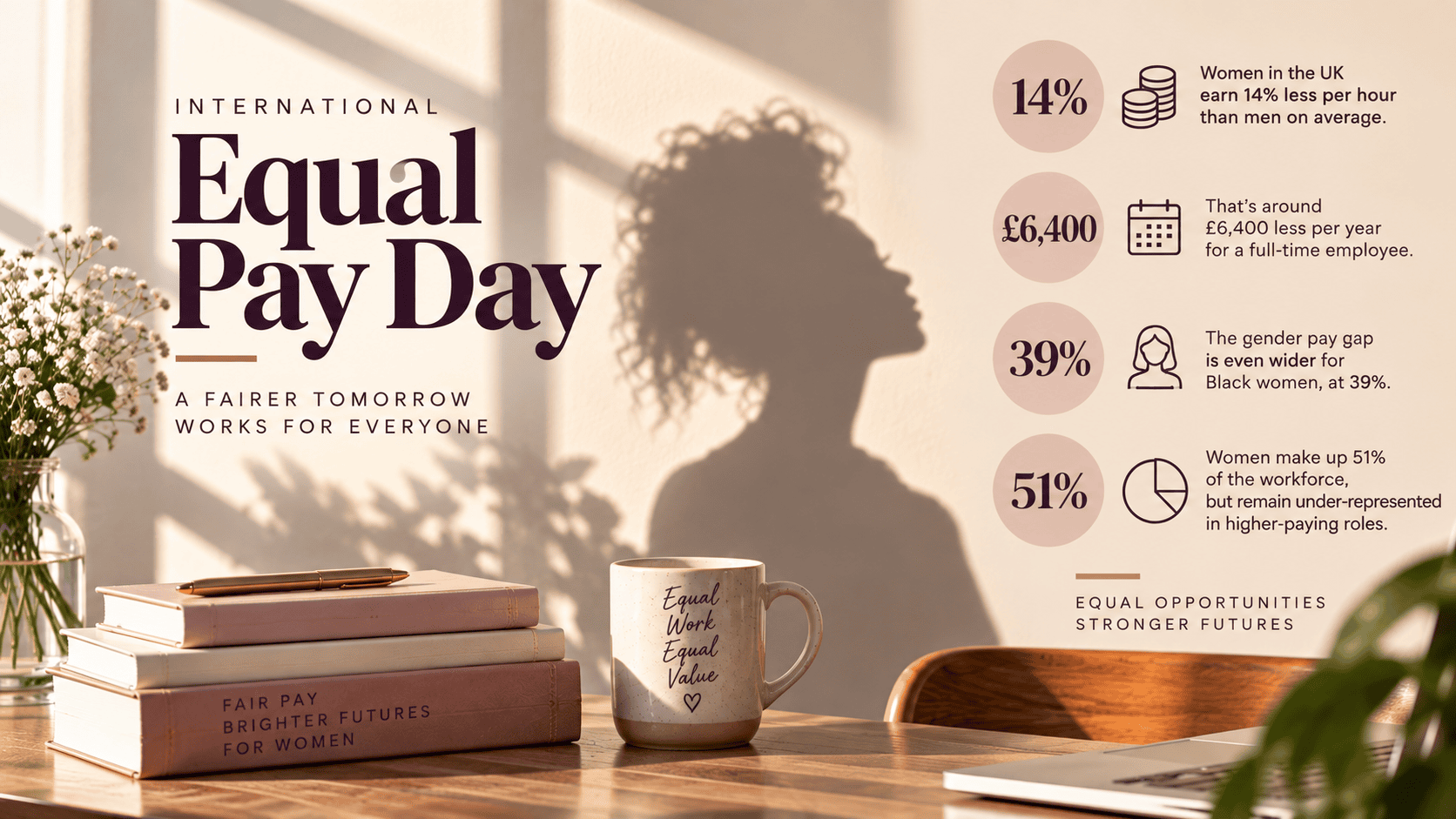
Equal pay and the gender pay gap are often discussed together, but they are not quite the same thing. Equal pay refers to the principle that women and men should receive equal pay when carrying out equal work or work of equal value. The gender pay gap looks more broadly at the difference between the average earnings of women and men across the workforce.
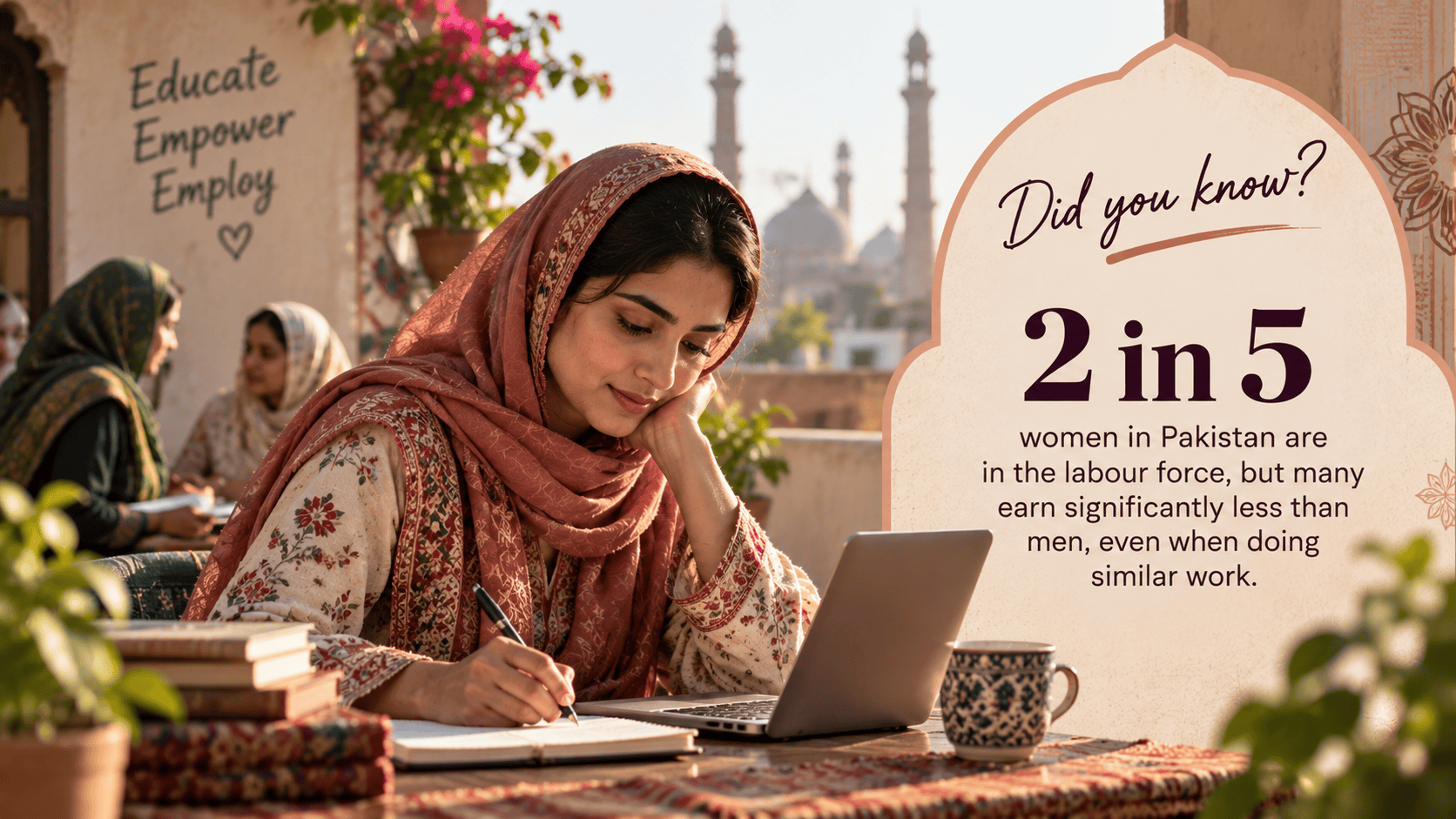
Globally, women continue to earn less than men on average. Although the size of the gap differs between countries, occupations and groups of women, its persistence tells us that economic equality has not yet been achieved.
There are many reasons behind these differences. Women are more likely to take career breaks or reduce their working hours because of caring responsibilities, while part-time and flexible roles may offer fewer opportunities for progression. Women and men also continue to be represented differently across industries and at different levels of seniority.
The consequences can build gradually. A relatively small difference in earnings may become considerably more significant when experienced over many years, affecting savings, pension contributions and longer-term financial security.
Behind every percentage are women making everyday decisions about what they can afford, what opportunities they can take and what kind of future they can plan.
 When Financial Independence Becomes Even More Important
For women experiencing domestic abuse, conversations about money can be particularly complex.
Domestic abuse can include economic abuse, where money and financial resources are used as a means of control. A perpetrator might restrict access to bank accounts, take a woman’s
wages, prevent her from working, interfere with her employment, create debts in her name or closely monitor what she spends.
Over time, this can leave a woman financially dependent and make the possibility of leaving an abusive relationship feel even more difficult.
The question of how to begin again can bring very practical worries. A woman may be thinking about where she could live, how she would support her children, whether she could afford transport or food and how she would manage if she had little or no money of her own.
This is why financial independence can become so meaningful. It is not simply about earning a salary. It can be connected to having choices, regaining control and feeling more confident about creating a future on your own terms.
The Work That Is Not Always Seen
International Equal Pay Day also encourages us to think about the work women do that is not always recognised financially.
Across families and communities, women continue to undertake significant caring and domestic responsibilities. Raising children, caring for older or disabled relatives, organising households and providing emotional and practical support all require time, energy and skill, yet much of this contribution remains unpaid.
These responsibilities can also affect women’s participation in paid employment. Some women reduce their hours, turn down opportunities or step away from employment altogether because caring responsibilities cannot easily be combined with work.
Returning later may mean rebuilding a career from a very different position. Skills may need updating, confidence may have changed and opportunities for progression may have been lost.
When we talk about valuing women’s work, we therefore need to recognise both the contribution women make within paid employment and the enormous amount of work taking place outside it.
Equality Does Not Look the Same for Every Woman
It is also important to recognise that women do not experience workplace inequality in exactly the same way.
Race and ethnicity, disability, age, migration, caring responsibilities and socioeconomic circumstances can all affect access to employment and opportunities for progression. For Black and minoritised women, gender inequality may intersect with racial discrimination and other barriers within the workplace.
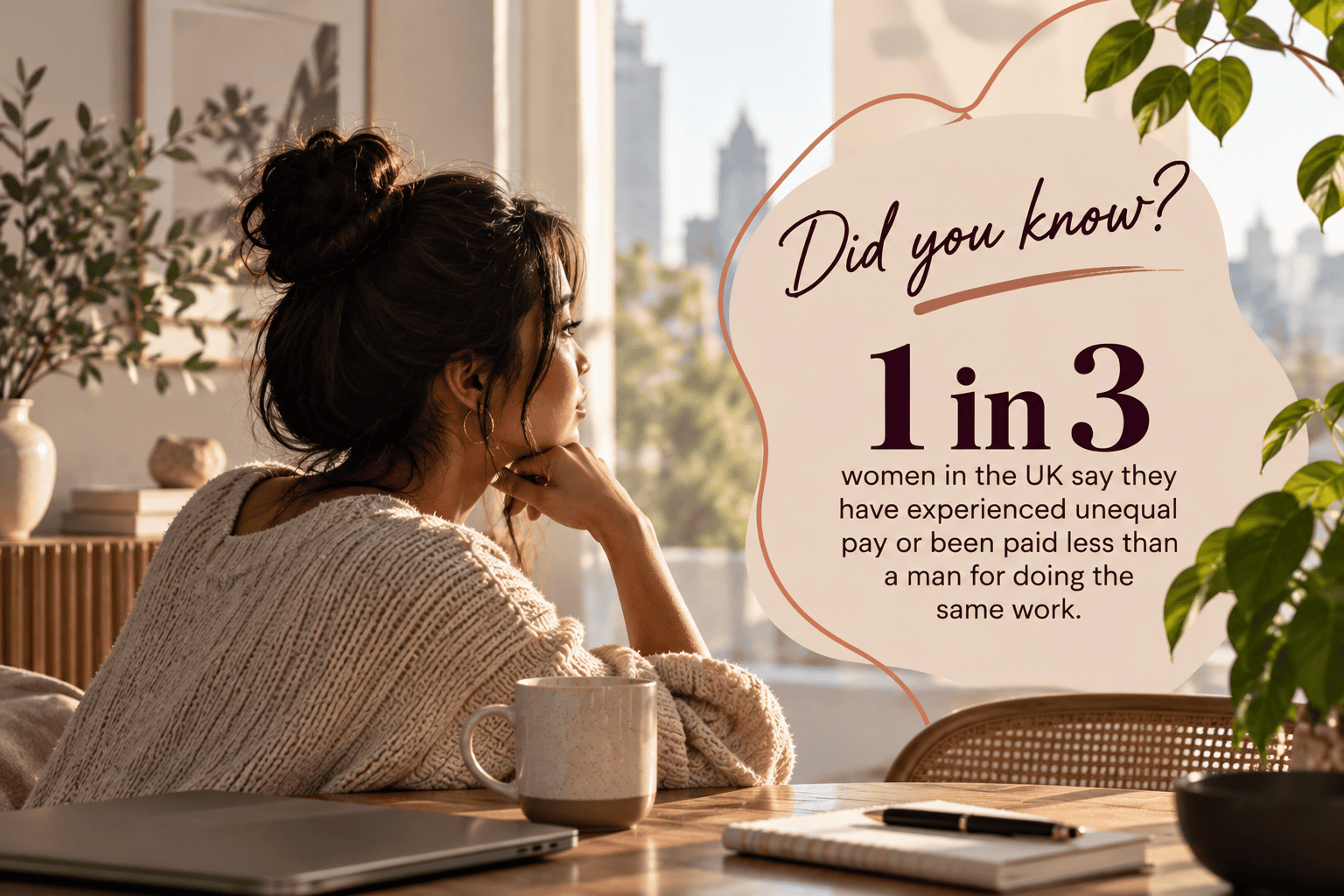
Some women who have moved to the UK may find that qualifications and professional experience gained elsewhere are not recognised in the same way. Others may encounter language barriers or have limited access to professional networks and opportunities.
These experiences can easily disappear when inequality is reduced to a single national statistic.
If we want to understand whether workplaces are genuinely becoming more equal, we also need to consider which women are progressing, whose work is being valued and which women continue to encounter barriers that others may never have to consider.
 Rebuilding Confidence After Domestic Abuse
Employment can play an important role in rebuilding independence after domestic abuse, but returning to work is not always straightforward.
A woman may have been prevented from working by a controlling partner or encouraged to believe that she was incapable of succeeding independently. She may have spent years away from employment while caring for children or managing difficult circumstances at home.
After leaving abuse, there may also be many immediate priorities competing for attention, including housing, finances, healthcare, immigration matters, legal proceedings and supporting children through significant changes.
Returning to education, completing training, applying for a job or entering a workplace again can therefore represent much more than career progression. For some women, these experiences can become part of gradually rediscovering confidence, abilities and ambitions that may have been diminished through years of control.
There is no single path towards independence and there should be no expectation that rebuilding happens quickly. Having opportunities, encouragement and appropriate support can help women decide what they want the next stage of their lives to look like.
Creating Workplaces Where Women Can Progress
Employers also have an important part to play in creating meaningful change.
Fair pay is essential, but equality also involves examining recruitment, promotion, training and opportunities for professional development. Flexible working should allow women to balance different responsibilities without automatically limiting their chances of progression.
Organisations can look carefully at who occupies their senior positions, who receives opportunities to develop and whether certain groups of employees are consistently underrepresented at higher levels.
Creating fair workplaces requires more than assuming that everyone has access to the same opportunities. It requires understanding that people’s circumstances differ and being willing to examine whether existing structures unintentionally create barriers.
When women are supported to develop their skills and progress professionally, the benefits extend beyond individual employees. Workplaces gain experience, perspectives and talent that might otherwise be overlooked.
 The Freedom to Shape Your Own Future
At Anah Project, we support Black, South Asian and Middle Eastern women and girls experiencing domestic abuse through culturally sensitive, trauma-informed refuge, advocacy and resettlement support.
We understand that rebuilding life after abuse can involve many interconnected areas. Finding safety may be the first priority, but creating a new life can also involve securing housing, accessing benefits and healthcare, addressing immigration concerns, returning to education or considering employment.
Financial independence can become part of this journey because having greater control over your own resources can create greater freedom to make decisions about your future.
International Equal Pay Day reminds us that economic equality is therefore about much more than comparing salaries. It is about whether women have genuine opportunities to participate, progress and be valued fairly for the contribution they make.
It is also about recognising the barriers that different women continue to face and ensuring that conversations about equality include those whose experiences have too often remained unheard.
A fairer future is one in which women do not have to choose between caring responsibilities and career progression, where background does not determine opportunity and where financial dependence cannot so easily become another means of control.
This International Equal Pay Day, we celebrate women’s contribution while continuing to work towards a future where every woman has the opportunity to build greater security, independence and confidence in the life she chooses for herself.