International Human Solidarity Day
What Solidarity Truly Means
Solidarity is a word often used but rarely explored in depth. It is not simply standing beside someone or offering sympathy. It is the willingness to recognise another person’s struggle as something that concerns you too. It is the understanding that human beings are connected, not just by shared ideals but by shared vulnerabilities. Solidarity is an active commitment — a refusal to look away.
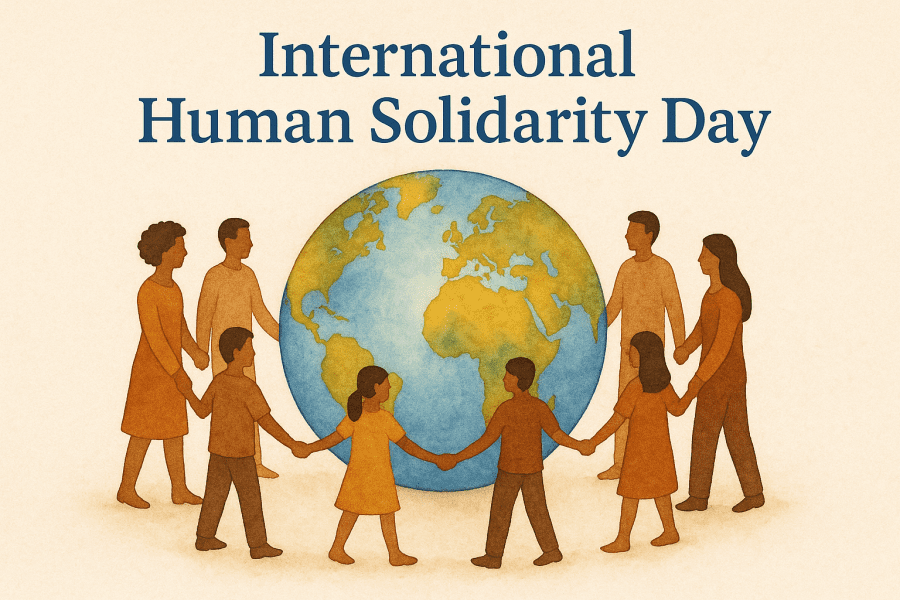
International Human Solidarity Day, observed on 20 December, encourages the world to reconsider what it means to act together. It reinforces the belief that no issue affecting one community is ever isolated. Whether it is violence, discrimination or marginalisation, the consequences ripple outward. Solidarity is the bridge that allows those ripples to be met with compassion rather than silence.
Solidarity as a Response to Inequality
Many forms of inequality do not occur in dramatic ways. They appear quietly in everyday interactions, in who is listened to and who is dismissed, in who is trusted and who must constantly prove themselves. For survivors of abuse and marginalisation the consequences of inequality are lived daily. Isolation can make their experiences feel invisible. That is where solidarity becomes powerful.
Solidarity challenges the idea that suffering should be endured privately. It draws attention to the social structures that allow abuse to remain hidden and marginalisation to remain normalised. It invites us to think differently: not “How did this happen to her?” but “Why does our world still allow this?” That shift in perspective is what fuels real change.
 Where Solidarity Begins
Solidarity does not begin with shared experience. It begins with recognition. You do not have to understand every detail of another woman’s life to acknowledge that her dignity matters. You do not need to know her history to recognise that violence and marginalisation violate her rights. Solidarity starts with choosing not to reduce someone to circumstances they did not choose.
Survivors often describe the moment they felt believed or supported as a turning point — not because it solved everything but because it ended the isolation. A single moment of solidarity can transform a woman’s sense of worth or possibility. It interrupts the internalised belief that she must cope alone.
Why This Day Matters for Anah Project
For Anah Project, solidarity is not an idea but a practice woven through every interaction. Women come to us carrying different histories, cultures and experiences, yet a shared need connects them: the need for safety, for understanding, for a space where their voices are neither questioned nor dismissed.
International Human Solidarity Day resonates with our work because it reflects the heart of our approach. We do not stand above survivors. We stand alongside them — recognising their agency, acknowledging their resilience and offering support without judgement. Solidarity is not about rescuing but about restoring. It is about reminding women that their lives are not defined by what they endured but by the strength they carry forward.
 The Collective Meaning of Solidarity
Solidarity holds communities together. It is the foundation of movements that shift public consciousness and change the way societies respond to violence and inequality. When people act collectively, barriers lose their power. Silence becomes harder to maintain. Harm becomes harder to ignore.
International Human Solidarity Day invites us to imagine what might change if solidarity became a daily habit rather than an occasional response. Not grand gestures, but moments of awareness: noticing when someone’s voice is overshadowed, questioning assumptions that excuse harm, or refusing narratives that isolate survivors. These moments, repeated across communities, create environments where safety and dignity become the norm.
Solidarity as a Path Forward
Human Solidarity Day is a reminder that social change is not built by institutions alone. It is built by people choosing connection over indifference. By communities deciding that harm inflicted on one person matters to all of us. By individuals understanding that dignity is collective — it cannot thrive for some while being denied to others.
For women who have faced abuse or marginalisation, solidarity can be the difference between feeling alone and feeling seen. For society, it is the starting point for real justice. Solidarity does not offer perfection. It offers presence, and that is often the beginning of healing.