Day for Tolerance: Powerful New Hope
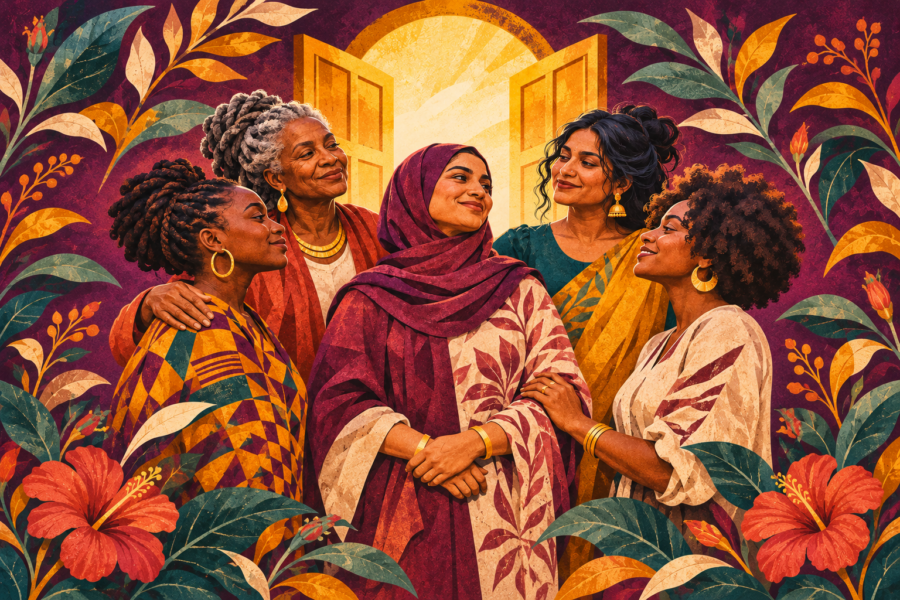
This International Day for Tolerance, we reflect on what helps a woman feel welcome, understood and able to be herself. Feeling welcome can begin with something small. Someone taking the time to pronounce your name correctly. Being able to speak without feeling that you have to explain or defend your background. A conversation in which your experiences are met with kindness.
These moments can help us feel that there is room for us, just as we are.
This International Day for Tolerance, 16 November, Anah Project is reflecting on what it means to create places where women feel accepted, respected and able to be themselves. For Black and minoritised women and girls affected by domestic abuse, that sense of belonging can be an important part of finding safety and beginning to rebuild their lives.
The Comfort of Being Understood
Reaching out for support can take courage. A woman may have spent a long time weighing up what to say, whom to trust and what might happen if she tells someone about the abuse she is experiencing.
Alongside concerns about her safety, she may worry about being judged because of her faith, her immigration status, the language she speaks or the choices she has made. Previous experiences of racism or discrimination may have given her reasons to be cautious.
A kind response cannot remove every worry. But being listened to patiently, without blame or assumptions, can make a difficult conversation feel a little easier.
She should not have to find the perfect words to deserve support. Nor should she have to explain an entire culture or community before someone hears what has happened to her.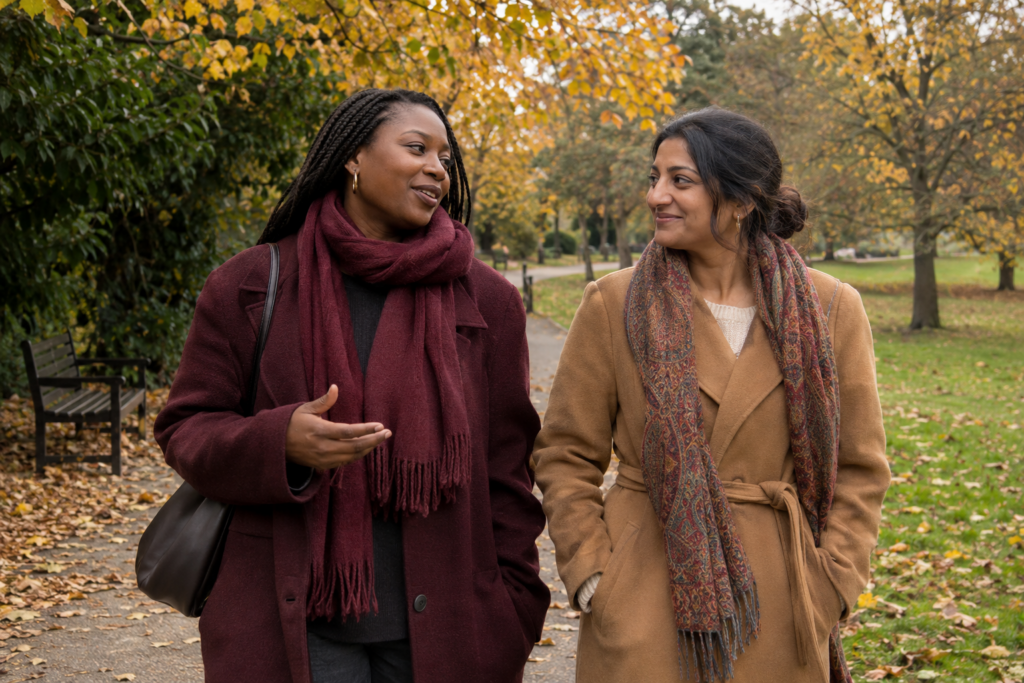
Making Room for Every Woman’s Story
Black and minoritised women and girls have different lives, relationships, beliefs and hopes. No single story can represent them all.
Something that brings comfort to one woman may feel difficult for another. Family relationships may be a source of strength, a source of pressure or a complicated mixture of both. Faith may offer reassurance and connection. A familiar language, meal or tradition may help a woman feel at home during a time when so much else has changed.
Understanding begins with being curious enough to ask and patient enough to listen.
It might mean asking what would make an appointment easier, whether an interpreter is needed or how a woman would prefer to be contacted. It also means respecting her answer, including when her wishes differ from what someone else expected.
These everyday choices help make support more personal, accessible and reassuring.
Respect Includes the Right to Be Safe
Tolerance asks us to treat people with dignity across our differences. That respect must also include a clear understanding that abuse is never acceptable.
No appeal to tradition, family reputation or community expectations should take away a woman’s right to safety. She deserves to make decisions about her relationships, her body and her future without threats, coercion or fear.
For some women, seeking safety may bring painful worries about losing relationships or a sense of belonging. Support should make room for those feelings. A woman can care deeply about her family or community while needing protection from someone within it.
She deserves compassion as she works through what that means for her, at her own pace.
Belonging Grows Through Everyday Kindness
More welcoming communities are shaped by the things we do each day.
We can give someone time to finish speaking. We can avoid making assumptions about a woman’s life because of her clothes, accent or surname. We can challenge a prejudiced remark and think carefully about whose voices are missing from a conversation.
We can also notice the practical things that make participation easier: clear information, accessible services and opportunities for women to share what they need.
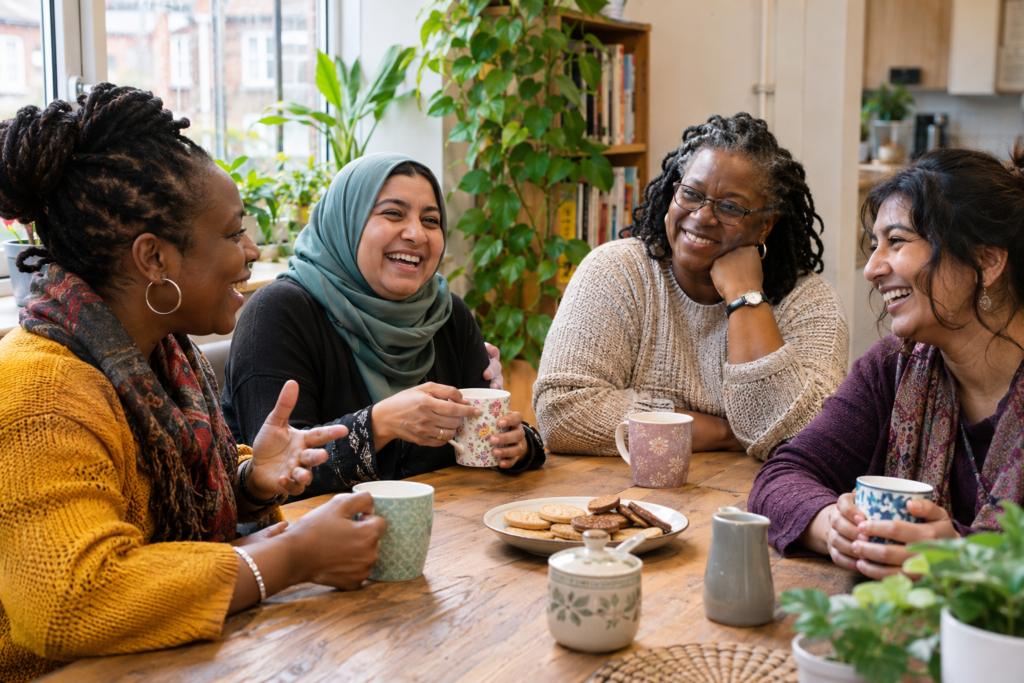
Sometimes, a sense of belonging grows quietly. Someone remembers how you like your tea. A familiar face welcomes you back. You feel comfortable enough to ask a question, share a worry or laugh without watching every word.
For a woman who has spent a long time feeling criticised or controlled, being treated with steady kindness can carry particular meaning.
A Future With Room to Be Yourself
At Anah Project, our work with Black and minoritised women and girls affected by domestic abuse is rooted in respect for women’s voices, dignity and choices.
We recognise that each woman brings her own experiences, strengths and hopes. Having access to support should never depend on fitting someone else’s idea of how she should look, speak, feel or live.
This International Day for Tolerance, we reflect on the care it takes to build communities where differences are respected and women feel able to ask for help.
Every woman deserves somewhere she can feel safe enough to speak, comfortable enough to rest and welcome enough to be herself.
Where Kindness Makes Room for Belonging
What helps a woman feel that she belongs?
Perhaps it is being welcomed into a room without feeling watched or judged. Perhaps it is hearing her own language when she is struggling to find the words. Or knowing that she can share something painful without being blamed for what happened.
Belonging grows through these experiences. Through the way people respond to us, the care they take and the space they give us to be ourselves.
For International Day for Tolerance on 16 November, Anah Project is reflecting on how we can bring that care into our communities, particularly for Black and minoritised women and girls affected by domestic abuse.
Before a Woman Says a Word
A woman seeking support brings much more than the circumstances that led her there. She brings relationships, memories, beliefs and hopes. There may be things she wants to leave behind, and others she wants to hold close.
A familiar meal might remind her of someone she loves. Her faith might help her through an uncertain day. Speaking her first language might offer relief after hours of trying to explain herself in another.
There may also be experiences that make trust difficult: being dismissed, encountering racism or finding that someone has already decided what her life must be like.
All of this can be present before a conversation begins.
A warm welcome cannot tell us her story. It can, however, help her feel comfortable enough to share it when she is ready.
“You Can Tell Me What Matters to You”
There is care in asking a question without deciding the answer beforehand.
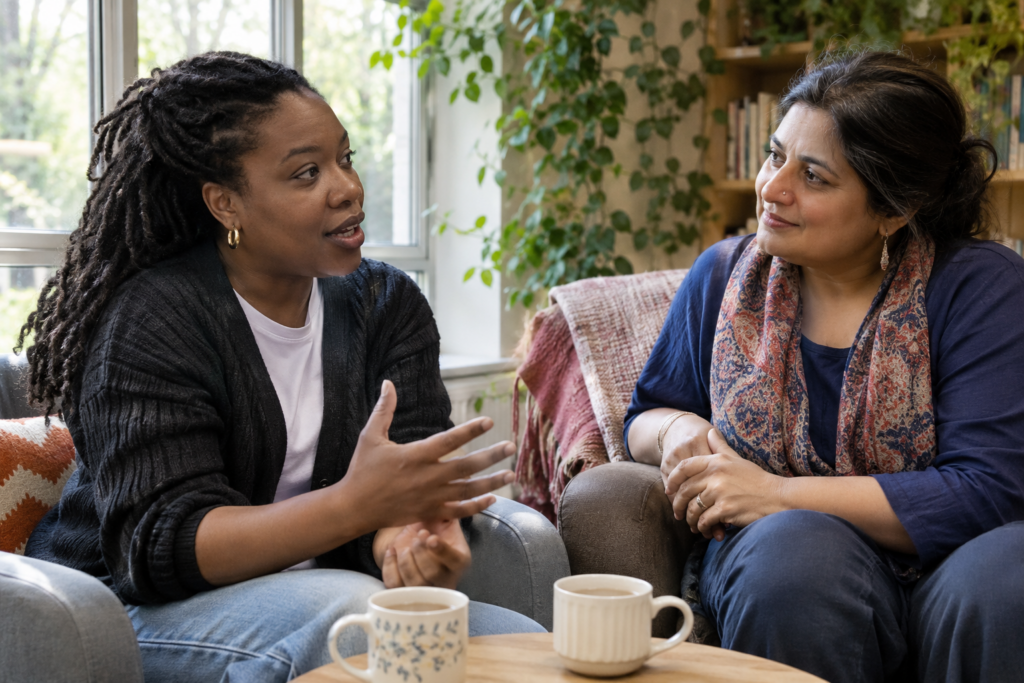
What would help you feel more comfortable? Is there anything you would like us to understand? How would you prefer us to contact you?
Questions like these give a woman room to express her own needs. They recognise that she knows things about her life that someone meeting her for the first time cannot.
For Black and minoritised women and girls, this matters. Assumptions about culture, religion, family or immigration status can leave women feeling misunderstood, even when someone intends to help.
Patient listening allows a different relationship to grow. A woman can say what matters to her, change her mind or explain that something does not feel right. Her voice has a place in the support she receives.
When Belonging Feels Complicated
We often speak about community as a source of comfort. It can offer friendship, shared memories and the reassurance of being known.
Yet a woman experiencing domestic abuse may have difficult feelings about the people and places closest to her. She may fear gossip, rejection or pressure to keep what is happening private. She may worry that seeking help will mean losing relationships she still treasures.
These feelings deserve a compassionate response.
A woman can love her family and need distance from someone within it. She can value her traditions and question expectations that cause her harm. She can want safety while grieving the life she hoped she would have.
Respecting her means allowing those feelings to exist together, without rushing her towards a simple answer.
Tolerance must always sit alongside her right to live free from abuse. Culture, faith and family reputation should never be used to excuse threats, coercion or violence.
The Welcome We Create Together
The spirit of this day lives in ordinary encounters as much as public statements.
It is there when someone takes the time to learn a name, makes information easier to understand or listens without interrupting. It is there when a colleague challenges a racist remark, or a neighbour offers kindness without expecting a woman to explain her circumstances.
Over time, these actions shape what a community feels like. They influence whether someone expects to be treated fairly, whether she feels comfortable asking a question and whether she believes she will be heard when something is wrong.
We all have opportunities to contribute to that welcome. Sometimes, it begins by noticing who is being left out and making space for them.
At Anah Project, our work with Black and minoritised women and girls affected by domestic abuse recognises the importance of being treated with dignity, having choices respected and receiving support that takes individual circumstances seriously.
This International Day for Tolerance, we hope for more places where women can arrive as they are and feel welcome.
Places where a difficult conversation is met with patience. Where differences are respected. Where a woman can begin to feel at ease, knowing that her voice matters and that there is room for her here.